

Introduction
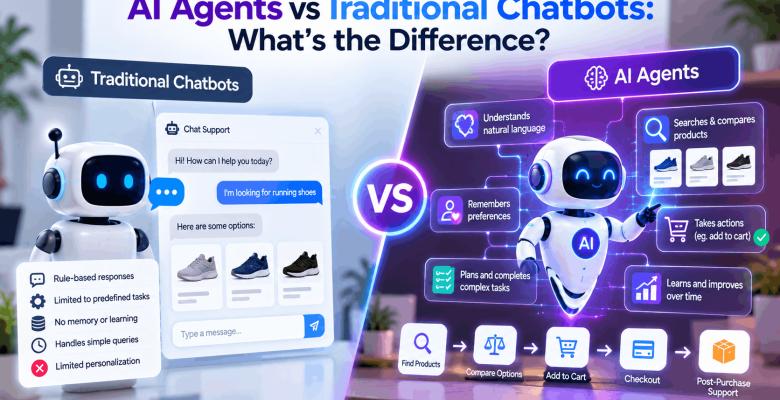
When discussing automated communication tools, the terms 'AI agent' and 'chatbot' are often used interchangeably. However, they represent distinct technologies with varying capabilities. Understanding the difference between AI agents and traditional chatbots is crucial for anyone exploring automation in customer service, business processes, or personal assistance. This confusion can lead to unrealistic expectations or underutilized potential. Let's clarify these concepts by examining their core functions, limitations, and appropriate applications.
What Are Traditional Chatbots?
Traditional chatbots are programmed software applications designed to simulate conversation with human users. They operate primarily through text-based or voice-based interfaces. Early chatbots followed strict rule-based systems, responding only to specific commands or keywords. For instance, if you asked a rule-based chatbot about store hours, it would recognize keywords like 'hours' or 'open' and retrieve a predefined answer from its database.
How Traditional Chatbots Work
Most traditional chatbots rely on one of two architectures: rule-based systems or simple machine learning models. Rule-based chatbots use decision trees crafted by developers. Each user input triggers a predetermined path in these trees, leading to scripted responses. If a user's question doesn't match any predefined rules, the chatbot typically responds with a default message like 'I didn't understand that.'
Machine learning chatbots, while more advanced than basic rule-based systems, still operate within limited parameters. They use natural language processing (NLP) to interpret user intent but lack deeper contextual understanding. For example, they might handle variations of common questions like 'What's your return policy?' but struggle with complex or multi-part inquiries.
Limitations of Traditional Chatbots
Traditional chatbots excel in handling straightforward, repetitive queries but face significant constraints. They cannot learn from interactions or adapt beyond their initial programming. If confronted with unfamiliar scenarios, they either provide generic responses or escalate the conversation to a human agent. Additionally, they typically operate in isolated sessions without retaining context between conversations. This makes them inefficient for personalized support or dynamic problem-solving.
What Are AI Agents?
AI agents represent a more advanced evolution of conversational AI. Unlike traditional chatbots, these systems exhibit autonomy, learning capabilities, and the ability to execute complex tasks. An AI agent can analyze data, make decisions, and perform actions across multiple systems with minimal human intervention. Think of them as digital employees capable of handling multi-step processes. For example, an AI agent might not only answer a customer's billing question but also adjust their account settings and schedule a follow-up reminder.
How AI Agents Work
AI agents leverage large language models (LLMs) and other machine learning frameworks to understand and generate human-like responses. They integrate with external data sources and applications via APIs, enabling them to retrieve real-time information and perform actions. This allows them to complete tasks like booking appointments, processing orders, or generating reports independently. Unlike chatbots, they maintain conversation history and context, resulting in more coherent and personalized interactions.
Capabilities of AI Agents
Key capabilities distinguish AI agents from traditional chatbots:
- Autonomy: They can initiate actions, make judgments, and operate without step-by-step guidance.
- Continuous Learning: They improve through interactions and feedback, refining responses over time.
- Task Execution: They perform complex workflows, such as analyzing data trends or coordinating between multiple systems.
- Contextual Awareness: They remember past interactions and adjust responses accordingly.
This makes them suitable for dynamic environments like personalized tutoring, advanced customer support, or business process automation.
Key Differences Between AI Agents and Traditional Chatbots
The distinction between AI agents and traditional chatbots becomes apparent when comparing their core attributes:
- Autonomy: AI agents operate independently, making decisions based on goals and data. Traditional chatbots follow predefined scripts without deviation.
- Learning Ability: AI agents adapt and learn from each interaction, while traditional chatbots remain static unless manually updated.
- Task Complexity: AI agents handle multi-step processes involving data analysis and system integrations. Traditional chatbots manage simple Q&A or basic transactions.
- Context Handling: AI agents maintain context across conversations, enabling personalized support. Traditional chatbots treat each query in isolation.
- Integration Scope: AI agents connect deeply with databases, CRMs, and other tools to execute tasks. Traditional chatbots typically access limited data for information retrieval.
These differences make AI agents more versatile but also more resource-intensive to develop and maintain.
Choosing Between an AI Agent and a Traditional Chatbot
Selecting the right tool depends on your specific needs. Consider these factors:
- Use Case Complexity: Traditional chatbots suffice for FAQ responses or basic form handling. For intricate processes like financial advisory or supply chain coordination, AI agents are preferable.
- Resource Availability: AI agents require robust infrastructure, continuous training data, and technical expertise. Rule-based chatbots can be deployed faster with lower upfront costs.
- Scalability Needs: If you anticipate handling unpredictable or evolving queries, AI agents offer greater flexibility.
- Personalization Requirements: Choose AI agents for highly tailored experiences, especially in sectors like healthcare or education.
Evaluate both current objectives and long-term goals. Starting with a chatbot for foundational tasks and later integrating AI agent capabilities can be a practical approach.
Conclusion
Traditional chatbots and AI agents serve different purposes in the automation landscape. Chatbots excel at handling routine, predictable interactions efficiently. In contrast, AI agents bring advanced problem-solving, adaptability, and autonomous task execution to complex scenarios. As artificial intelligence continues to evolve, the line between these tools may blur, but their fundamental distinctions in autonomy and capability remain critical for effective implementation. Understanding these differences ensures you deploy the right solution for your unique challenges and opportunities.

Discussion & Feedback